
← All guides · ⬇ Printable 2-PDF Master Bundle ($19)
Best Montessori Toys for 6–12 Months (2026)
Between 6 and 12 months, babies learn to sit, grasp, transfer, drop, and pull up to stand. These simple, open-ended wooden and silicone toys match each new skill without batteries or screens.
0–12m1–2 yrs
What to Avoid
- Battery-operated toys that 'play for' the baby with lights, sounds, and screens
- Toys with small detachable parts that fit through a toilet-paper tube (choking hazard under age 3)
- Painted toys with no published toy-safety testing
- Baby walkers with wheels that the baby sits inside (the AAP advises against them)
Testing & Certifications to Look For
ASTM F963 / CPSIA tested (US toy safety)EN 71 (European toy safety standard)Food-grade silicone for mouthable toysSolid wood with water-based or non-toxic finishes
Our Picks

Wooden Rattles & Grasping Toys
Plastic rattles with electronic sounds
Easy-to-grip rings and keys help babies practice passing a toy from hand to hand, shaking, and mouthing, all key 6-month skills.
Lightweight wood or silicone, sized for small hands
Why we picked it: Passing a toy hand to hand and shaking it builds coordination, and lightweight shapes are easy for babies to grip and mouth.

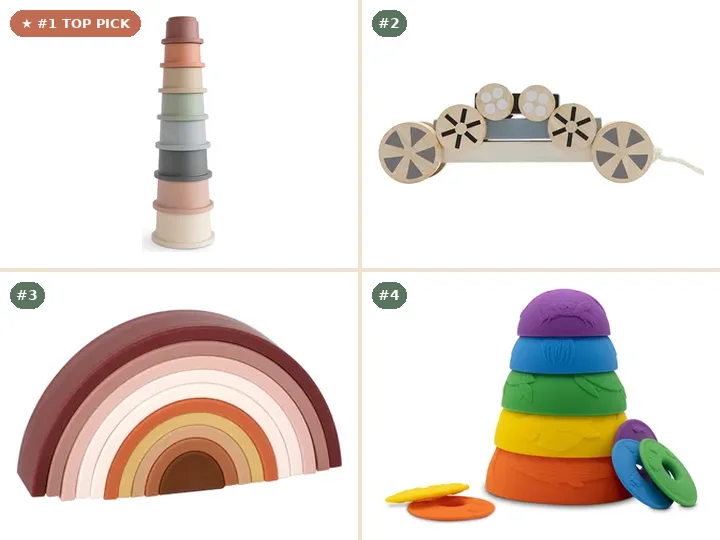
Montessori Stacking Cups & Stackers
Light-up plastic stacking towers
Babies start by knocking stacks down, then nesting cups, then stacking them up. One toy grows with them and doubles as a bath and sandbox toy.
Silicone or wood, nesting design, no batteries
Why we picked it: One simple toy grows with baby, from knocking down to nesting to stacking, teaching size, order, and cause and effect.

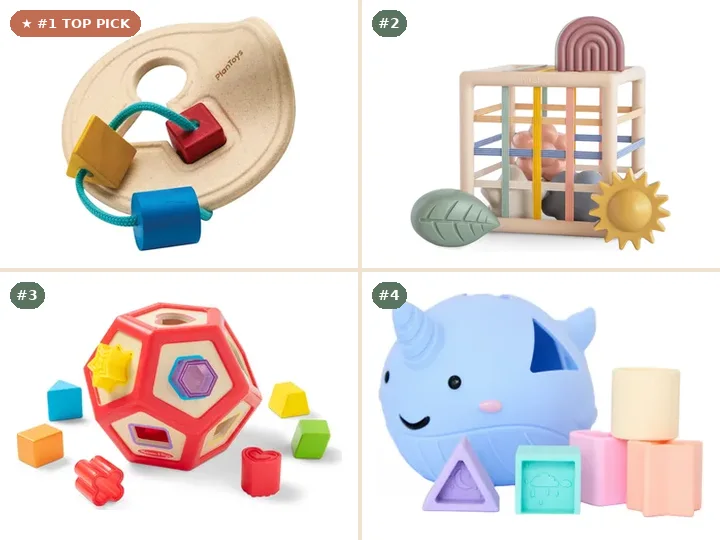
First Shape Sorters & Posting Toys
Talking electronic shape sorters
Posting a shape and seeing it disappear (then come back) teaches object permanence and cause-and-effect. Start with one or two simple shapes.
Chunky shapes, wood or soft silicone, open-ended
Why we picked it: Dropping a shape in and seeing it come back teaches object permanence and cause and effect, a big leap in this age range.

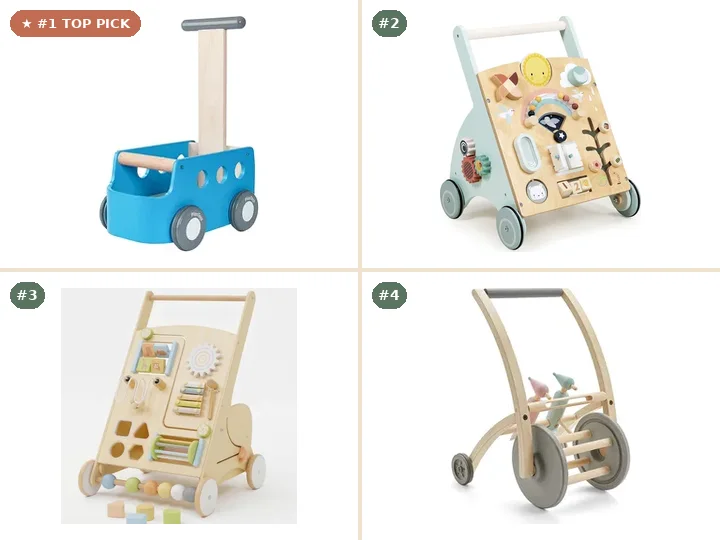
Wooden Push Walkers for First Steps
Sit-in plastic baby walkers
Once your baby pulls to stand, a sturdy push walker supports cruising and those first steps. The baby stays upright on their own feet instead of being held up by a seat.
Solid wood frame, stable wide base, some include activity panels
Why we picked it: A push walker lets babies stand, balance, and walk on their own feet, while the AAP has urged against sit-in baby walkers because of injury risks. Always supervise, especially near stairs.

FAQs
How many toys should a 9-month-old have out at once?
Montessori educators usually suggest 3–6 toys on a low shelf, rotated every week or two. Fewer choices help babies focus longer and explore each toy more deeply.
Are push walkers safe, unlike sit-in walkers?
The AAP warns against sit-in baby walkers because of fall and injury risks. Stand-behind push walkers are a different design: the baby holds the handle and walks on their own feet. Always supervise, choose a wide, stable base, and keep the walker away from stairs.
When should I introduce a shape sorter?
Many babies enjoy dropping objects into a container around 8–10 months. Start with a single round shape or an open posting box, then add more shapes as fine motor control improves toward the first birthday.
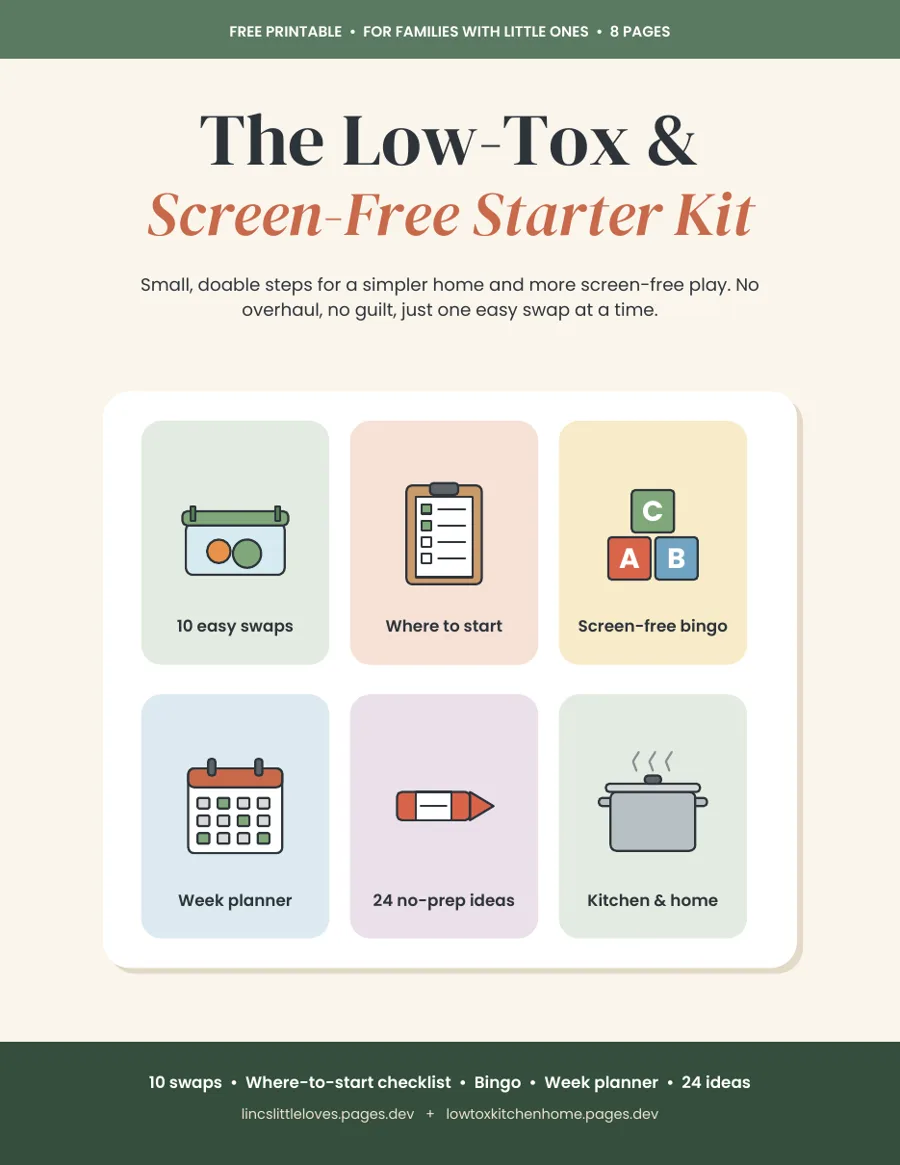
Get the free Low-Tox & Screen-Free Starter Kit
8 printable pages for parents of little ones: 10 easy lower-tox swaps, screen-free bingo, a week planner and a one-page “where to start” checklist. The download appears right here, and we’ll email you our free Nursery & Playroom Checklist plus 3 short emails over the next week, then one short email a week.