
← All guides · ⬇ Printable 2-PDF Master Bundle ($19)
Best Non-Toxic Kids Toothpaste & Toothbrushes (2026)
Kids put toothpaste in their mouths twice a day, and plenty of it gets swallowed. These picks skip dyes, SLS and glitter, with soft silicone brushes for first teeth and PFAS-free floss for when teeth start to touch. Every claim below comes from the brand's own site.
0–12m1–2 yrs2–3 yrs3–4 yrs4–6 yrs
What to Avoid
- Too much toothpaste. The AAP and ADA advise a smear the size of a grain of rice under age 3 and a pea-size amount from 3 to 6
- Artificial dyes, glitter and candy-style flavors that make kids want to eat the paste
- Adult whitening and charcoal toothpastes, which aren't made for kids' teeth
- Floss coated with PTFE (a type of PFAS). Look for floss the brand says is PFAS-free
- Hard or medium bristles. Soft or extra-soft bristles are gentler on gums
- Leaving kids to brush alone with a long-handled brush. Supervise and help until they can brush well on their own
Testing & Certifications to Look For
ADA approved (hello kids Wild Strawberry fluoride toothpaste, per the brand)Ecocert COSMOS Natural (Jack N' Jill Natural Certified Toothpaste, per the brand)Food-grade, BPA-free silicone (Frida, Haakaa, Mushie and Jack N' Jill baby brushes, per the brands)PFAS-free floss (Jack N' Jill Fairy Floss and NFco Friendly Flossers, per the brand)
Our Picks
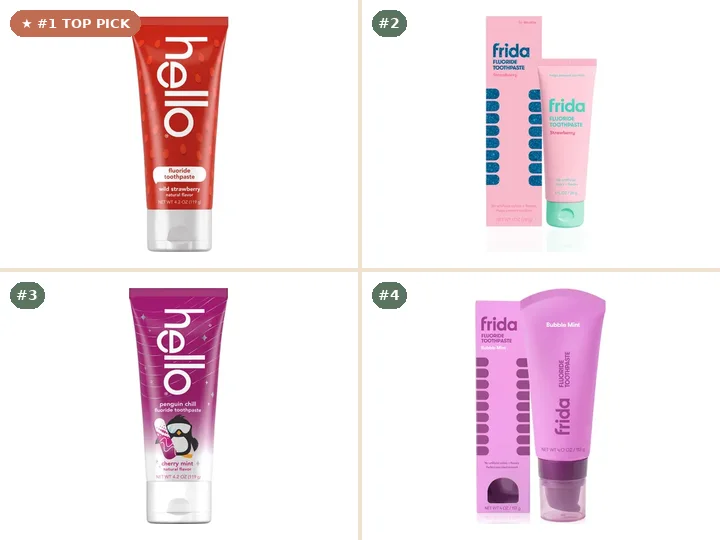
Kids Fluoride Toothpaste Without Dyes
Dyed, glitter or candy-style kids toothpaste
The AAP and the ADA both recommend fluoride toothpaste from the first tooth. hello says its kids fluoride pastes have no dyes, SLS, parabens or artificial sweeteners, and its Wild Strawberry paste is ADA approved. Frida's strawberry fluoride paste is made for ages 3+ months without artificial colors, flavors, sulfates or parabens.
hello kids Wild Strawberry: fluoride, ages 2+, ADA approved (per the brand); hello Penguin Chill: fluoride, no dyes or titanium dioxide (per the brand); Frida 3+ Months: fluoride, 1 oz tube; Frida for Kids: fluoride, pea-size pump, ages 6–11
Why we picked it: Fluoride strengthens enamel and helps prevent cavities, which is why the AAP and ADA recommend it from the first tooth. A dye-free, mild-flavor paste makes the rice-grain smear easier to stick with.
Fluoride-Free Hydroxyapatite and Xylitol Kids Toothpaste
Kids pastes with SLS, dyes and artificial flavors
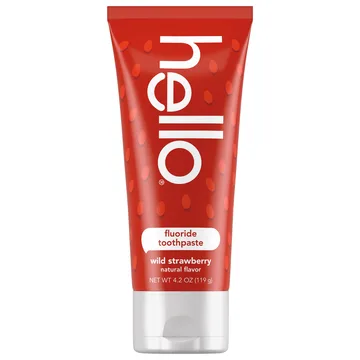
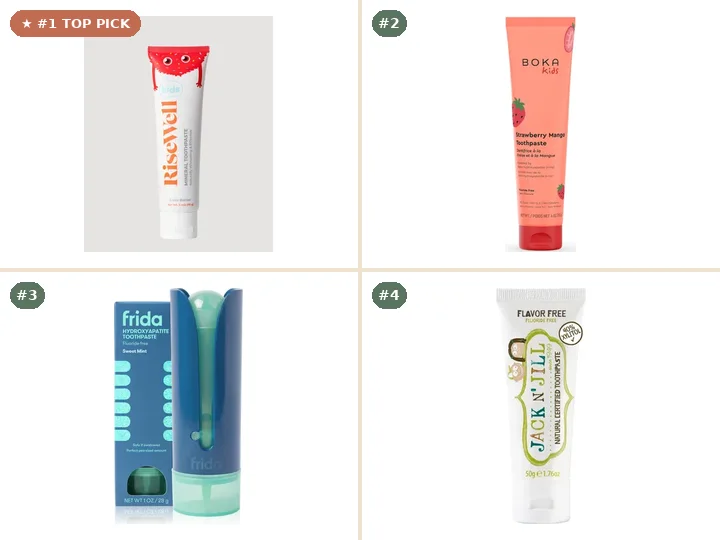
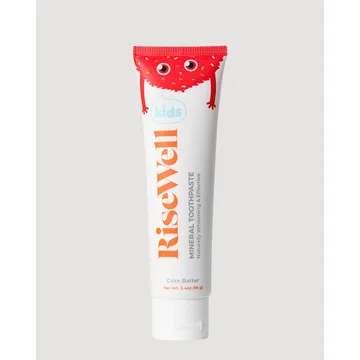
For families who've discussed a fluoride-free paste with their dentist. RiseWell and Boka use hydroxyapatite, the mineral that makes up most of tooth enamel. Frida's HAp paste is made without dyes, sulfates, parabens or sugar. Jack N' Jill's flavor-free gel uses xylitol and carries Ecocert COSMOS Natural certification, per the brand.
RiseWell Kids: hydroxyapatite, vegan, gluten-free; Boka Strawberry Mango: nano-hydroxyapatite, free from dyes, SLS and parabens; Frida Kids: hydroxyapatite, squeeze-twice pea-size tube; Jack N' Jill: 40% xylitol, RDA 15, from 6 months (per the brand)
Why we picked it: Hydroxyapatite is the calcium-phosphate mineral that makes up most of tooth enamel. These pastes skip SLS and dyes. Ask your child's dentist whether a fluoride-free paste fits their cavity risk.

Silicone Finger Brushes for First Teeth
Hard-bristle brushes on tender gums
A finger brush lets you clean gums and the first few teeth while you control the pressure. SmileFrida's double-sided brush comes with a stand and lid. Haakaa's 2-pack has super soft silicone bristles. Mushie's has a soft-bristle front and a textured back for gums.
SmileFrida: double-sided silicone, 3 months+, stand and lid; Haakaa: silicone, 2-pack; Mushie: food-grade silicone, bristles plus massaging bumps; Jack N' Jill Stage 1: food-grade silicone, BPA free, 6 months+, 2-pack with case
Why we picked it: Soft food-grade silicone is gentle on gums and boils or washes clean easily. Starting a wipe-and-brush routine before many teeth arrive gets babies used to the feeling.

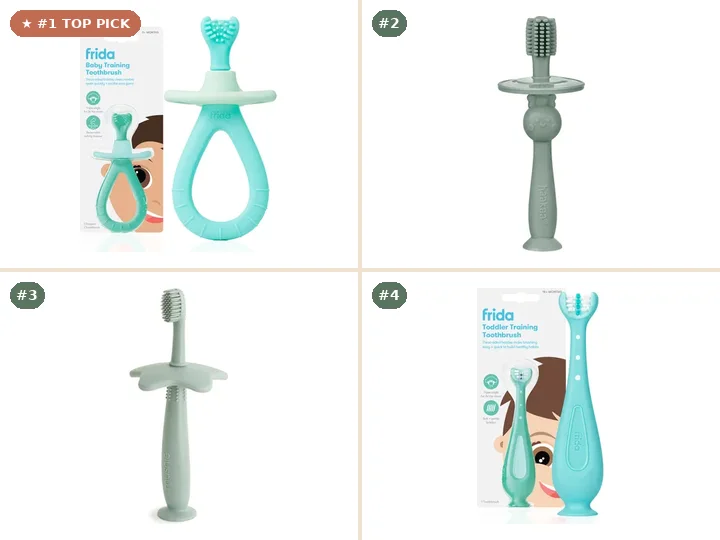
Baby and Toddler Training Toothbrushes
Hard plastic brushes with long, pokey handles
Training brushes let babies practice holding a brush themselves, then you finish the job. Frida's baby brush has a loop handle and a removable stopper, and Mushie's has a removable safety guard. Haakaa's 360° head cleans whichever way it's held.
Frida for Babies: BPA-free food-grade silicone, 6–18 months, removable stopper; Haakaa 360°: 100% food-grade silicone, 6 months+, suction base; Mushie Star: food-grade silicone, suction base, removable safety guard; Frida for Toddlers: triple-angle bristles, 18–24 months, color-change replace indicator
Why we picked it: A wide guard or stopper keeps the brush from going too far into the mouth, and a chunky silicone grip builds fine-motor control while little ones practice brushing on their own.
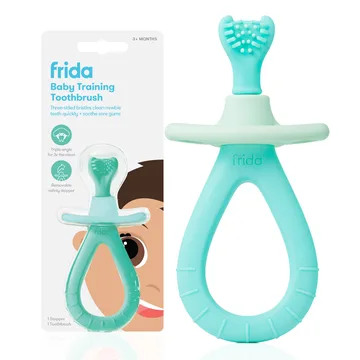
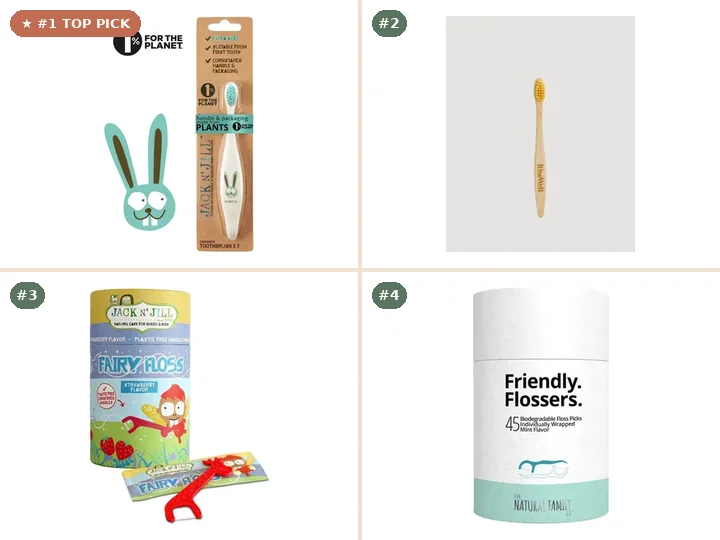
Plant-Based Kids Toothbrushes and PFAS-Free Flossers
All-plastic brushes and PTFE-coated floss
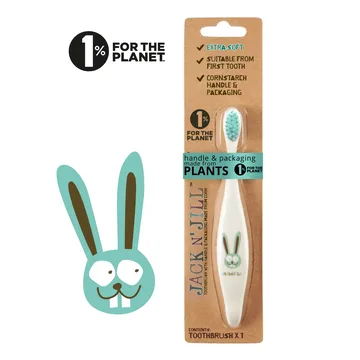
Jack N' Jill's kids brushes have handles made from corn starch and extra-soft bristles, and are suitable from the first tooth. RiseWell's kids brush has a bamboo handle. Jack N' Jill's Fairy Floss flossers have corn-based handles and are free from PFAS, BPA, PVC and phthalates, per the brand.
Jack N' Jill Bio: corn starch handle, extra-soft tapered bristles, BPA and PVC free; RiseWell Kids: bamboo handle, soft bristles, BPA-free; Fairy Floss: 30 individually wrapped, ages 3+ with supervision; NFco Friendly Flossers: cornstarch handles, no PFAS (per the brand)
Why we picked it: Some floss is coated with PTFE, a type of PFAS, so a brand-stated PFAS-free floss is an easy swap. Start flossing once two teeth touch, and swap plastic handles for corn starch or bamboo.
FAQs
When should I start brushing my baby's teeth?
As soon as the first tooth appears. Before that, you can wipe gums with a soft cloth or silicone finger brush. The AAP recommends brushing twice a day with a smear of fluoride toothpaste the size of a grain of rice, and a first dental visit by the first birthday.
Is fluoride toothpaste safe for toddlers?
The AAP and ADA recommend fluoride toothpaste for all children from the first tooth, using a rice-grain smear under 3 and a pea-size amount from 3 to 6, so the amount swallowed stays small. Some families choose hydroxyapatite or xylitol pastes instead. Talk with your child's dentist about which fits their cavity risk.
When should kids start flossing?
Once two teeth touch, since a toothbrush can't reach between them. Parents usually floss for young children. Kid-size flossers with handles make it easier, and supervision is recommended for younger kids.
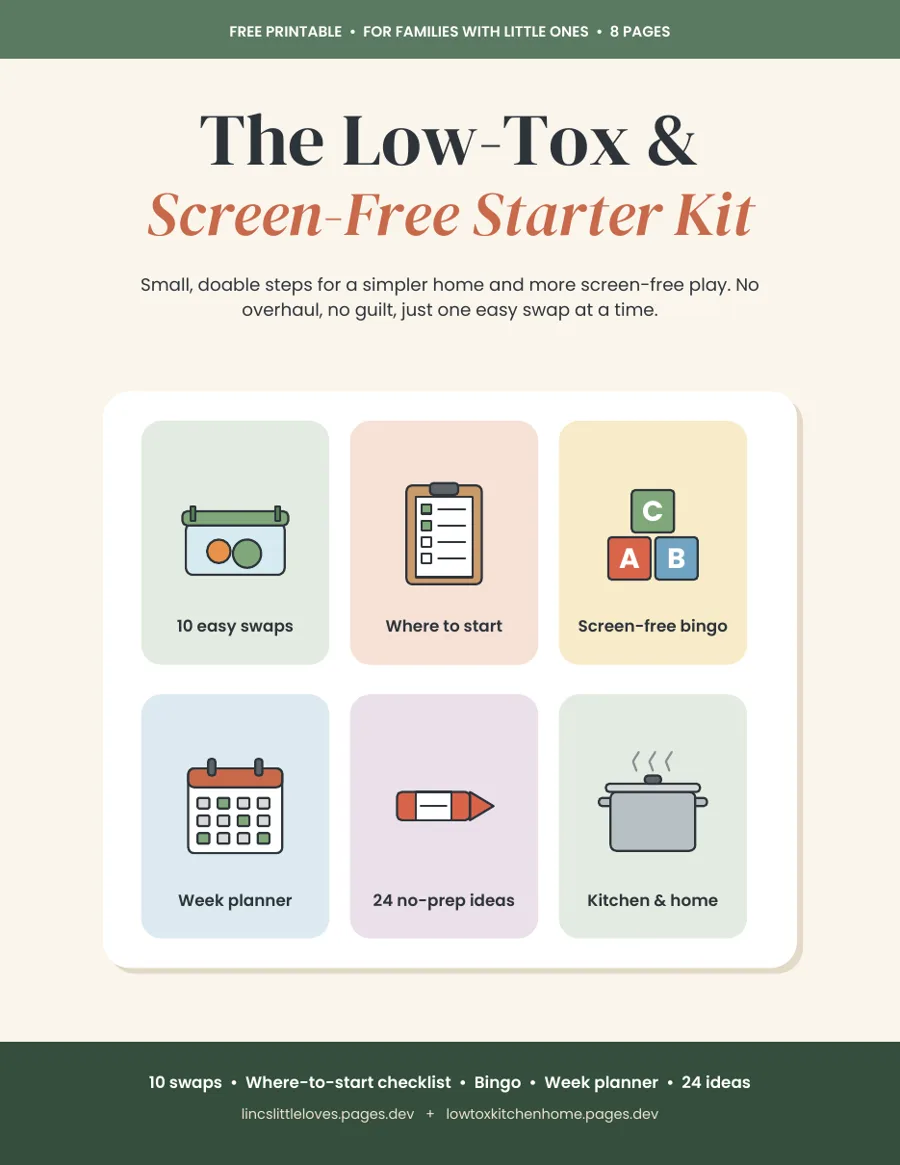
Get the free Low-Tox & Screen-Free Starter Kit
8 printable pages for parents of little ones: 10 easy lower-tox swaps, screen-free bingo, a week planner and a one-page “where to start” checklist. The download appears right here, and we’ll email you our free Nursery & Playroom Checklist plus 3 short emails over the next week, then one short email a week.