
← All guides · ⬇ Printable 2-PDF Master Bundle ($19)
Best Screen-Free Advent Calendars for Toddlers (2026)
An advent calendar makes the wait for Christmas feel concrete for little kids, with no daily chocolate or app. These reusable fabric pocket calendars, build-a-scene sets and story-a-day options turn December into a 24-day screen-free tradition.
1–2 yrs2–3 yrs3–4 yrs4–6 yrs
What to Avoid
- Calendars filled with tiny toys, coins or marbles for kids under 3 (small parts are a choking hazard)
- Button batteries in light-up or musical calendar fillers
- A daily candy habit if you'd rather not have one. Stickers, ornaments and activity slips fill pockets just as well
- Hanging fabric calendars with long cords within reach of a crib or play yard
- Calendars rated 3+ in a house with a younger sibling, unless you hand out pieces one at a time and put them away after
Testing & Certifications to Look For
Age grading on each set (PicassoTiles Gingerbread Advent: ages 3+; Melissa & Doug Countdown to Christmas: 3–5 years per the brand)100% organic cotton (Wee Gallery Festive Friends calendar, per the brand)ASTM F963 toy safety for fillers (check the brand's listing)Check CPSC.gov/Recalls before buying secondhand
Our Picks
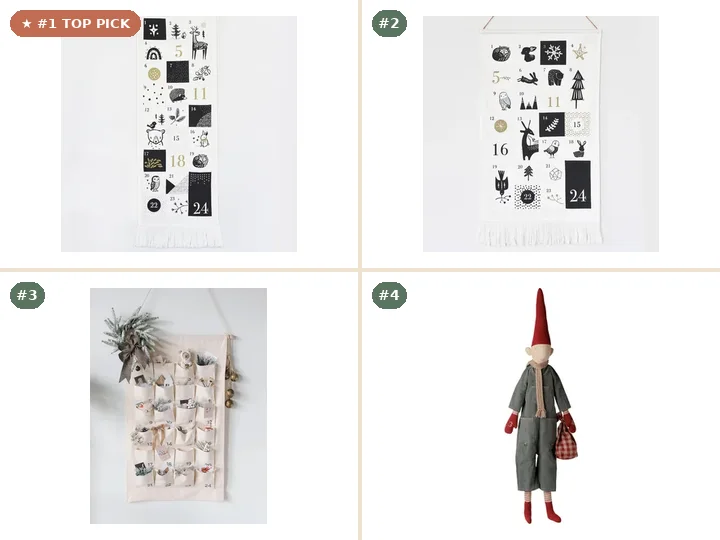
Fill-Your-Own Fabric Advent Calendars
Disposable cardboard chocolate calendars
Pocket calendars come out year after year, and you choose what goes in each pocket: a sticker, a small ornament or a slip with a family activity. Wee Gallery's Festive Friends calendar is screen-printed on 100% organic cotton twill, and Colored Organics makes a 100% cotton version.
Wee Gallery Festive Friends: 24 pockets, organic cotton, made in India (per the brand); Colored Organics: 100% cotton, 33 x 20 in with 4 x 4 in pockets, dowel and rope for hanging included; both come empty
Why we picked it: A reusable cloth calendar avoids the cardboard and foil waste of a disposable one, and the pockets hold activity slips just as easily as treats.
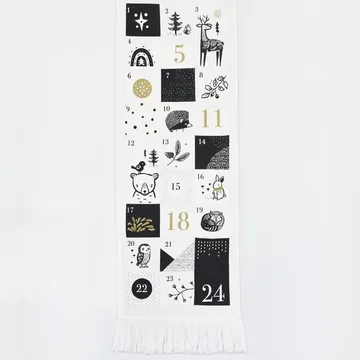
Build-Something-Every-Day Advent Sets
Advent calendars with plastic trinkets
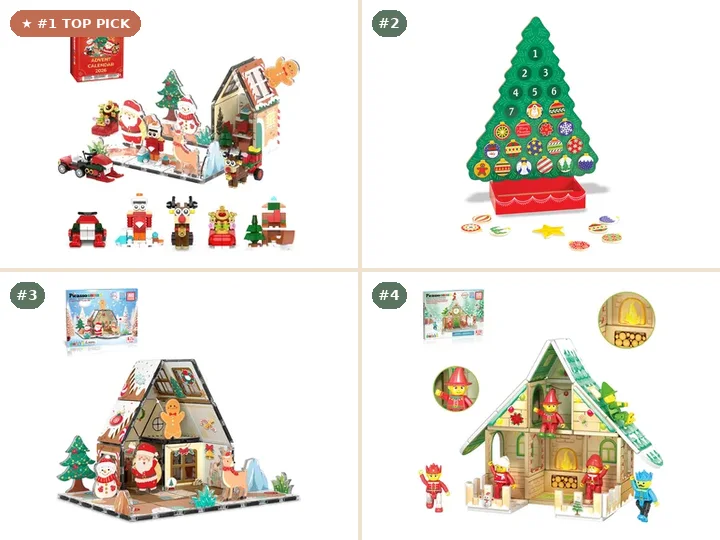
Building sets turn the countdown into a project that grows each day. PicassoTiles' Gingerbread House Advent Calendar has 24 daily surprises of magnetic tiles, bricks and holiday characters (ages 3+), and Melissa & Doug's wooden tree has 24 magnetic ornaments to add one at a time.
PicassoTiles Gingerbread House Advent: 24 daily surprises, ages 3+; Melissa & Doug Countdown to Christmas: wooden tree, 24 magnetic ornaments plus a star, pieces fit in the attached box at the base of the tree
Why we picked it: Adding a piece a day gives toddlers a concrete way to see time passing, and stacking and placing build fine-motor and spatial skills.
Story-a-Day Audio Advent
A December of extra screen time
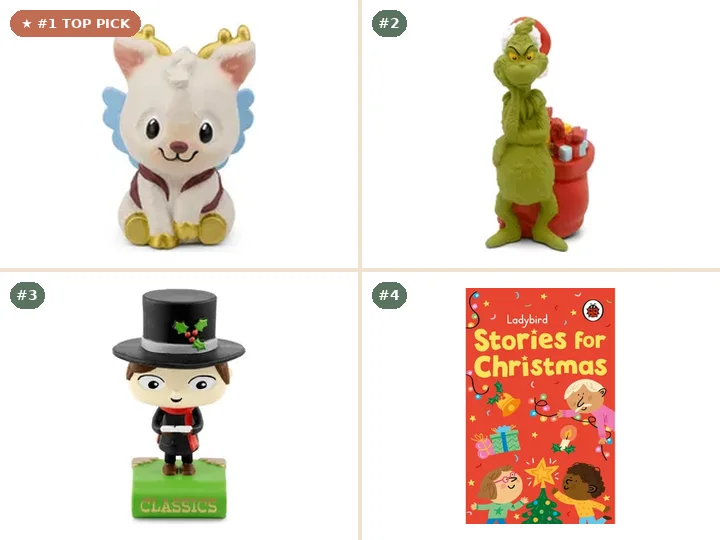
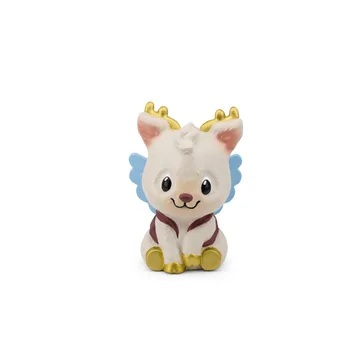
If your family already has a Toniebox or Yoto player, an audio advent adds a short story to each day. Holly's Christmas Adventure is an advent calendar Tonie, and Christmas stories like The Grinch and A Christmas Carol fill out the season.
Tonies play on Toniebox players; Yoto cards play on Yoto players; the two systems are not cross-compatible
Why we picked it: A short daily story builds anticipation without a screen or sugar, fits easily into a bedtime routine, and reuses a player your family already owns instead of adding more stuff.
Candy-Free Advent Pocket Fillers
Daily chocolate and plastic trinkets
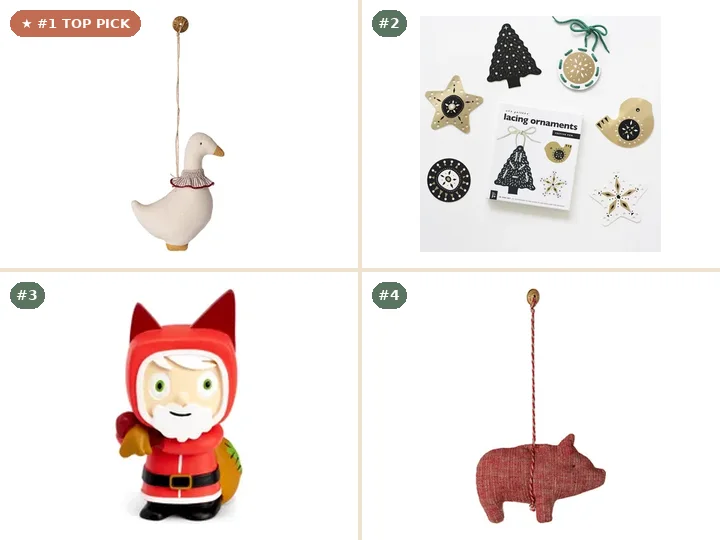
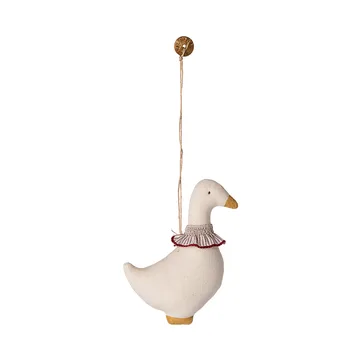
Not every pocket needs a toy. Mix small fabric ornaments for the tree with lacing ornaments, a Santa Creative Tonie you record holiday messages onto, and activity slips such as "bake cookies" or "read a Christmas book."
Maileg fabric ornaments with hanging loops; Wee Gallery Festive Fun Lacing Ornaments (6 boards, ages 3+); Santa Creative Tonie (record your own audio)
Why we picked it: Experiences and keepsakes add up to a calmer December than 24 small toys, and fabric ornaments fill the tree year after year.
24 Screen-Free Advent Pocket Ideas
- Bake and decorate cookies together
- Drive or walk to see Christmas lights
- Make a paper snowflake for the window
- Read a holiday book under a blanket
- Have a hot cocoa picnic on the floor
- Hang one fabric ornament on the tree
- Make a card for a grandparent or neighbor
- Have a dance party to holiday music
- Build a blanket fort and read inside
- Pick a toy to donate
- Do a holiday floor puzzle
- Lace a holiday ornament
- Paint with watercolors on brown kraft paper to make wrapping paper
- Have a family pajama night
- String cereal or popcorn garland (age 4+, with supervision)
- Make a gingerbread house from graham crackers
- Record a holiday message for a relative
- Have a candlelight dinner with flameless candles (battery doors secured)
- Go on a winter nature walk and collect pinecones
- Play freeze dance to Christmas songs
- Make a handprint ornament
- Visit the library for holiday books
- Leave a note for the mail carrier
- Read The Night Before Christmas on Christmas Eve
FAQs
What age can a toddler understand an advent calendar?
Most kids start to get the idea of a daily countdown somewhere around age 2 to 3. Younger toddlers still enjoy opening a pocket each morning, even if Christmas itself feels abstract. Keep it simple: one pocket, one small thing, the same time each day.
What can I put in an advent calendar instead of candy?
Small fabric ornaments, stickers, a slip with a family activity ("bake cookies," "see the lights"), a holiday book to read that night, or a new story for a Toniebox or Yoto player. For kids under 3, avoid tiny toys and anything small enough to be a choking hazard.
Are advent calendar toys safe for under 3s?
Many building and figure advent calendars are labeled 3+ because they include small pieces. For a younger sibling, choose a fabric pocket calendar you fill yourself, or hand out the day's pieces with supervision and put them away after.
Get the free Low-Tox & Screen-Free Starter Kit
8 printable pages for parents of little ones: 10 easy lower-tox swaps, screen-free bingo, a week planner and a one-page “where to start” checklist. The download appears right here, and we’ll email you our free Nursery & Playroom Checklist plus 3 short emails over the next week, then one short email a week.